
Seeing Is Believing: How video MPIs turn Fixed Ops trust into Dealership Value
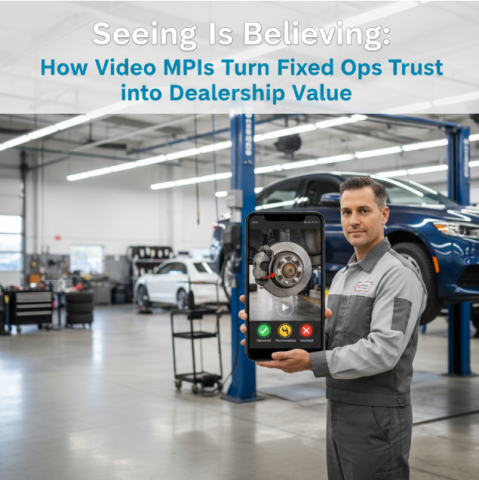
Video multi-point inspections (MPIs) are no longer a “nice-to-have” in fixed ops, they are rapidly becoming a defining feature of high‑trust, high‑value dealerships. A recent CBT News segment with Tom Druzynski, Director of Service Operations at West Herr Automotive Group, shows how a straightforward investment in technician video can transform customer perception, repair approvals, and internal efficiency and what that shift means for dealers who want to stay ahead.
Why Customers Trust Video More Than Words
Customers have always struggled to fully trust service recommendations they cannot see. When an advisor talks through a list of red and yellow items on an MPI, many customers default to “decline” because they are unsure what is truly necessary. West Herr attacked that problem by equipping roughly 650 technicians with iPhones and pairing short videos to electronic MPIs, so customers can see actual vehicle conditions brake wear, leaks, undercarriage rust, or, importantly, that everything looks good.
The result is a different kind of conversation: the store is “reporting the news,” not “selling” a repair. When the customer watches a video on their phone and hears a tech calmly explain findings in plain language, trust rises, and objections fall. West Herr sends these videos by text or email, making them easy for customers to review later or share with spouses and family decision‑makers who often influence whether work gets approved.
Measurable Gains in Hours, Approvals, and Efficiency
As with many process changes, some technicians at West Herr initially pushed back, worried that videos would be extra unpaid work on top of an already detailed MPI checklist. Those concerns faded quickly once the data came in: the group saw increased hours per repair order, higher closing percentages on recommended work, and faster approvals because customers could make decisions without repeated phone calls.
Video MPIs are also improving internal operations. Used‑car managers can now assess trade‑ins and auction purchases more quickly, including undercarriage and corrosion issues in harsh winter markets, which helps prioritize recon decisions and manage aging. As Gordon Wisbach notes, some forward‑thinking dealers even use video MPIs on trade‑ins during sales negotiations, creating a transparent, documented basis for appraisal discussions with customers. Reframed professionally, his view is that “dealers who extend video MPI into used‑vehicle evaluations gain a powerful, visual tool to support their trade values and reduce friction at the desk.”
OEM Pressure: From Innovation to Requirement
What started as a competitive differentiator is now moving toward an industry expectation. According to Druzynski, manufacturers including Mazda and Audi are beginning to require video documentation within their service programs, signaling that video MPIs are on the path from early‑adopter tactic to OEM standard. Broader fixed‑ops commentary for 2025 echoes the same theme: technology like video inspections is central to transparency, customer satisfaction, and retention in a market where service traffic is too valuable to waste.
For dealers, this has two implications. First, delaying investment increases the risk of being behind both your factory and your competitors when video becomes a compliance box as well as a CSI driver. Second, stores that have already embedded video MPIs into their culture will be better positioned to negotiate, measure, and optimize against OEM requirements, rather than scrambling to catch up.
What This Means for Dealership Value
From GW Marketing Services’ perspective, video MPIs sit squarely at the intersection of trust, process, and profitability, three of the biggest levers in store valuation. They:
- Increase customer confidence, which drives higher acceptance of legitimately needed work and stronger CSI.
- Create consistent, documented processes that buyers and investors look for when assessing operational maturity.
- Support more disciplined used‑vehicle appraisals and reconditioning, which improves gross and reduces surprises.
In a buy‑sell or succession context, a dealership that can show documented gains in hours per RO, approval rates, and retention tied directly to video MPI usage tells a compelling story about modern, scalable fixed‑ops management. That story matters when buyers are comparing rooftops and deciding which operations truly justify a premium multiple.
Where to Start
For dealers who have not yet embraced video MPIs or who are using them only sporadically—the lesson from West Herr and other leaders is straightforward:
- Start with a straightforward process and simple tools (smartphones + integrated MPI platform).
- Train technicians and advisors not just on the “how,” but on the “why” of transparency, trust, and faster approvals.
- Track key metrics (view rates, approvals, hours per RO, CSI) and use that data to refine scripts and workflow.
Dealers who take these steps now will not only meet evolving OEM expectations but also position their stores as high‑trust, high‑value operations in the eyes of customers, manufacturers, and future buyers alike.
Turn Video Trust into Real Dealership Value - Call Gordon Today
In a market where customers demand transparency and buyers pay a premium for disciplined, data‑driven operations, video MPIs are no longer optional, they are a strategic lever for growth, profitability, and store value. Dealers who move first will capture higher hours per RO, stronger CSI, and a more compelling story when it is time to sell or expand. If you want an objective, experienced perspective on how to turn tools like video MPIs into real blue sky, contact Gordon G. Wisbach Jr. at 508‑395‑2500 to discuss your fixed ops performance, OEM relationships, and overall dealership strategy.